
8 Ways to Record and Preserve Your Family History
When people think about leaving something behind after they die, they often think of money, possessions or photographs. But for many families, the most treasured inheritance are the stories and family history.
During the lockdowns of 2020, my grandmother was confined to her room in a care home 4,000 miles away from me. And whilst I was also in a lockdown, mine being a little more flexible and self-monitored, we both were in need of distractions. So we embarked on exploring her family’s history through Ancestry.com. We’d spend hours on the phone each week, me asking her to remember names and places and dates of births while I typed into my laptop and slowly pieced together a family tree dating back to the mid 1800s.
My grandmother and I had a challenging relationship. Her religious beliefs created a very narrow path to walk and I was always a rebellious soul. But this was a really special time for both of us, where she recalled stories about the people and places that shaped her, and I could learn more about this troubled and complicated woman that played such a significant role in shaping who I had become.
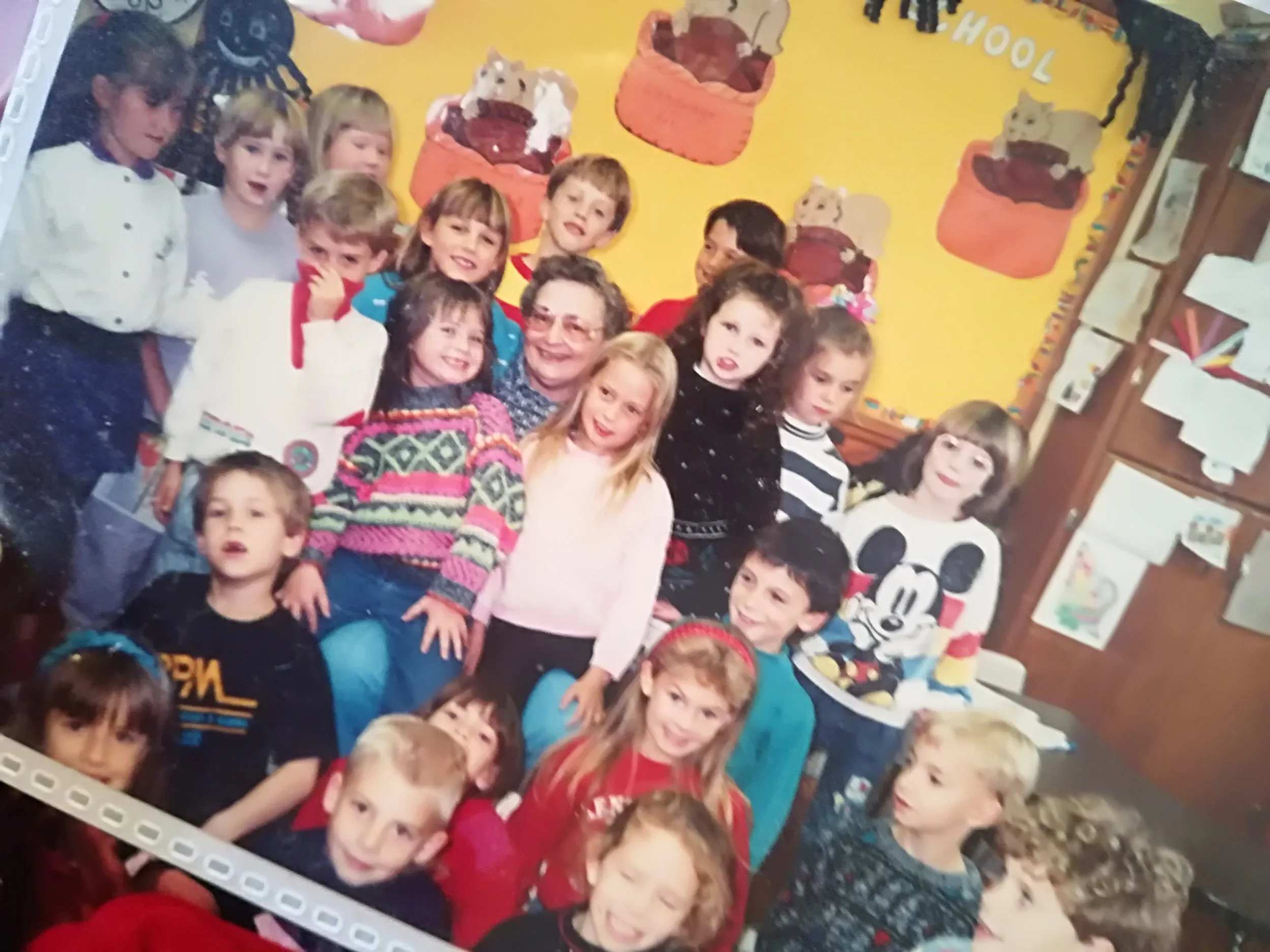
Photo: My grandmother, Florence, attending my 1st grade class to read to us. I’m in the jazzy pink jumper on the left, my then best friend on grandma’s other knee and the whole class attempting to pose for a photo. Circa 1990?
For some people, family history is endlessly fascinating. They know the names of great-grandparents, can tell you where the family came from, and delight in sharing stories that have been passed from one generation to the next. Others have a much more complicated relationship with the past. Perhaps family relationships have been difficult, memories are painful, or they simply don't see themselves as someone with an interesting story to tell.
Neither response is right or wrong. Every family has its own history, and every person has their own relationship with it. The important thing to remember is that preserving someone's memories isn't about creating a perfect historical record. It's about capturing the voice, personality, humour, values and experiences of someone you love while you still can. Years from now, a recording of your mum laughing about her first job, your grandad describing the house he grew up in, or your aunt reflecting on what she's learned about life may become one of your family's most treasured possessions.
Why preserve family stories?
Research has shown that maintaining continuing bonds with loved ones after they die can be a healthy and important part of grief. Hearing someone's voice, seeing their expressions, or reading their own words can help people feel connected long after they are gone.
These recordings often become more valuable with time. Children and grandchildren who were too young to ask questions themselves may one day discover stories they never knew. Future generations gain a richer understanding of where they come from, what shaped their family, and the values that have been passed down through the years.
These kinds of projects also benefit the person doing the remembering. Looking back over a lifetime can foster a sense of meaning, identity and accomplishment. For many older adults, sharing their experiences can be deeply affirming, especially when someone listens with genuine curiosity. Whether it's a professionally produced memoir or simply a conversation recorded over a cup of tea, you're creating an heirloom that cannot be replaced.
What if your parents or grandparents aren't interested?
Not everyone is naturally drawn to the idea of recording their life story, and that's okay. Some people worry that their lives haven't been interesting enough. This was something my grandmother often said, which always astounded me because her life was, from my perspective, full of TV-worthy drama. Her life had all the hallmarks, of a Hallmark film (apologies, for the very American reference!) In other words, her life was anything but boring. But I think deep down, it was difficult for her to engage with some of those experiences and so she simply skipped over them.
Others feel self-conscious being recorded or find the idea of talking about themselves uncomfortable. Some may associate life review with being "old" or approaching death, making the invitation feel unsettling. Rather than asking, "Would you like to record your life story?" try approaching it with curiosity instead.
You might ask:
"I've realised there are so many things I don't know about your childhood."
"I'd love to hear more about what life was like when you were my age."
"Can I record this so I don't forget it?"
"I'd love future grandchildren to hear this story in your own voice."
Keep conversations informal and follow their interests. You don't need to start at the beginning and work chronologically. Often the richest stories emerge naturally from a photograph, a family recipe, an old holiday or a favourite piece of music. Remember too that consent matters. Some people won't want to participate, while others may be happy to share only certain parts of their lives. The goal isn't to create a complete biography; it's to preserve whatever they feel comfortable sharing.
1. Professionally recorded family podcast
This is a pricier option compared to some of the others in this list, and it will likely only appeal to certain types of personalities, but can be a fun gift idea. For people who enjoy conversation more than writing, a professionally recorded audio interview can be a wonderful option. A trained interviewer guides the conversation over several hours, helping someone reflect on their childhood, relationships, work, challenges and hopes. The recordings are then professionally edited into something resembling a personal podcast.
The greatest gift isn't simply the stories themselves, it's preserving someone's actual voice, laugh and personality. And the experience of doing a podcast or film can be a wonderful way to bond with loved ones. For this kind of project, Story Locker provide the options of recording at home or in a professional studio.
2. Family documentary
Sometimes seeing someone smile, gesture or become animated while telling a favourite story is just as meaningful as hearing their voice. Professional video legacy interviews often combine filmed conversations with family photographs, home videos and music to create a documentary-style keepsake.
Again, it’s a pricey option, but could be a brilliant experience for a loved one. Eulogy Legacy offer a few different packages that range in prices starting at around £700.
3. Professionally written memoirs
Brace yourself, the costs for some of these services are, honestly, a little shocking. But hey, if you’re nosey like me, you’ll likely enjoy having a look at what’s on offer…even if it’s out of the budget.
If someone enjoys telling stories but would rather not write them down, memoir companies can interview them over several sessions before turning those conversations into a beautifully written book. These often include photographs, timelines, family trees and professionally edited writing, creating a lasting record that can be passed down through generations.
There are several UK companies providing this kind of service, ranging from around £1,000 to £30,000:
4. Hybrid voice and book projects
Some services now combine audio recordings with printed books, like Tell Me Your Story UK, Story Keeper or Remento. As family members read through the memoir, they can scan QR codes that allow them to hear the original voice recordings alongside the written stories. It's a lovely way of combining two very different kinds of memories. And is a lot more affordable than many of the other options.
5. Guided life story companions
Some organisations offer something a little different: instead of a one-off interview, someone visits regularly over weeks or months, gradually helping a person reflect on different stages of their life.
This slower pace often suits people living alone, those who enjoy companionship, or anyone who benefits from having time to remember. Jeli & Co offer a few different packages starting at around £700.
6. Memory journals and prompt books
Not every project needs to involve professionals. There are now many beautifully designed journals filled with prompts such as:
What activity can you remember really enjoying doing as a child?
What was school like?
What traditions and rituals did your family practice?
What advice would you give your younger self?
These can be completed independently or used as conversation starters between family members. These are best for people who enjoy writing. People who naturally kept journals in their lives or perhaps used writing as a regular means of communication. These types are more comfortable with recording their memories in this way. Search “memory journal” or “keepsake journal” and you’ll find loads of options.
7. Record conversations yourself
Perhaps the simplest and most meaningful option is also the cheapest. A smartphone, tablet or digital recorder is all you need to begin preserving family stories. Some of the most treasured recordings aren't professionally produced at all, they're simply ordinary conversations taking place around the kitchen table over tea and biscuits. Don't worry about perfect sound quality or asking the "right" questions. Authentic conversations are often far more valuable than polished interviews. There are loads of apps for editing available now, and if in doubt ask one of the family’s young ones to help out…they’ll surely know how to help with the tech side of things and working on a project like this can be great way for multiple generations of the family to bond.
8. Community oral history projects
Many museums, libraries and local history groups run oral history projects, inviting local people to share memories of growing up, working or living in a particular area. As well as creating something meaningful for your own family, these recordings often become part of local archives, helping preserve social history for future generations. Reach out locally to find out what projects already exist in your area.
A few questions to get started
If you're not sure how to begin, start small. Instead of asking someone to tell you their entire life story, try questions like:
What's your earliest memory?
What did your childhood home feel like?
Who do you think has had a significant influence on you?
What was your first job like?
What world events do you remember most clearly?
How did you meet your partner/spouse?
What are you most proud of as a parent/professional/community leader?
What do you hope future generations remember about you?
You may be surprised by what unfolds. The stories we tell become part of who we are. Recording them isn't simply about preserving the past, it's an act of love for the future. Long after photographs have faded and possessions have been divided, the sound of a familiar voice or the memory of a favourite story can continue to comfort, connect and remind us that the people we love remain woven into our lives in ways that extend far beyond their lifetime.
Author’s note: This site does not act as an affiliate or take commissions, any services linked here are for signposting purposes so readers can do their own research.
Receive one email a month with the most recent blog posts and upcoming gatherings and events you want to know about. Sign up to the This Mortal Life mailing list and join our community to stay connected. It’s free, and it’s a lovely community to be connected to. Join us!
